








Many Melbourne businesses invest time in suburb pages, but Google may not value them. Depending on their construction, these pages could be harming your SEO efforts. This happens when location pages are built to tick a box rather than serve a reader.
It usually goes wrong in two ways. First, thin duplicate suburb pages that are basically the same, with just the suburb name swapped out. Google treats these as low-value content and often ignores them. Second, pages loaded with keywords that trigger spam signals before they can rank.
This guide covers what a correct Melbourne suburb SEO strategy looks like: what makes a location page rank, convert, and how to avoid mistakes that quietly kill your results.
At Clickmatix, we’ve worked across many industries on these problems. Our experience has taught us there’s a little more nuance required than most guides admit.
What Is a Location Page (and Why Melbourne Businesses Get Them Wrong)
The definition of a location page in an SEO context
A location page aims to rank for service-and-suburb keyword combinations, such as “Plumber Camberwell,” “Dentist Carlton,” or “SEO Agency South Yarra.” Its purpose is to demonstrate to Google and users that your business genuinely operates in that area.
Location pages are only valid if your business actually serves those suburbs. The content must reflect real operations, not just a template with the suburb name inserted.
Location pages Google loves vs location pages Google penalises
Pages that genuinely assist users in a specific location are acceptable; pages created solely to capture traffic from suburb keywords and direct users to a generic contact form are considered “doorway pages” by Google. These are viewed as manipulative rather than helpful.
Effective suburb landing pages are unique, genuinely useful, and include authentic local proof, such as testimonials from local customers, completed projects in the area, or service context specific to the suburb. In contrast, copy-paste pages with only the suburb name changed are easily identified by both Google and users, even if users cannot specify why the page feels insubstantial.
The 5 Most Common Location Page Mistakes Melbourne Businesses Make
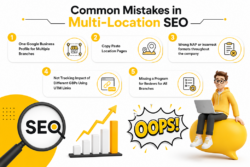
Mistake 1: Duplicate content across suburb pages
Duplicate content across pages is the most common issue found in SEO audits. Because if the only difference between your Hawthorn and Fitzroy pages is the suburb name, you have created duplicate content that undermines your SEO efforts, and Google often cannot determine which page to rank and may rank neither. Additionally, this approach dilutes your site’s authority because identical pages do not reinforce one another.
Mistake 2: Targeting every Melbourne suburb without real service evidence
Publishing 40 suburb pages in a week sounds like a strong coverage play. In practice, if you have no reviews, no completed jobs, no customer mentions from those areas, the pages feel hollow, because they are. Trust signals matter for conversion just as much as they do for rankings. A prospective customer in Thornbury who lands on a page with zero proof you’ve ever worked there is going to find someone else.
Mistake 3: No unique local trust signals
No suburb-specific testimonials, no photos from a local job, no mention of a familiar landmark or local detail and the page ends up feeling like it was written by someone who’s never been there. Even one or two real local references changes the feel of a page significantly, both for readers and for how Google evaluates it.
Mistake 4: Ignoring internal linking
Orphan pages rarely rank. A suburb page that isn’t linked from your main service page, your homepage, or anywhere in your site navigation is essentially invisible to Google’s crawl. Every location page needs to be connected to the relevant service page, ideally in both directions. Blog posts should feed into suburb pages too, where it’s natural.
Mistake 5: Keyword stuffing suburb names
“Looking for a plumber in Richmond? Our Richmond plumbing team offers Richmond plumbing services across Richmond and the surrounding Richmond areas.” That’s an exaggeration, but only slightly. Repeating the suburb name excessively is a spam signal, and it reads terribly. Google’s algorithms have been flagging this kind of pattern for years, and it actively hurts rankings rather than helping them.
What a High-Performing Melbourne Suburb Page Actually Looks Like
The anatomy of a suburb page that ranks and converts
Getting the location page structure SEO right means including a few non-negotiables. A unique H1 that combines the service and suburb clearly. A suburb-specific opening paragraph, not “we service all of Melbourne” but something that actually acknowledges the area.
A short explanation of why you work in that suburb. At least one local testimonial or job reference if you have it. Project photos where possible, these make a real difference. An embedded map or mention of your service radius. A FAQ section unique to that page. And a clear CTA with real contact details.
That’s local landing page best practice. Not a template, but a checklist of elements that make the page feel credible to someone genuinely looking for help in that suburb and each element earns its place by contributing something specific, not just filling space.
How many words should a Melbourne suburb page be?
There’s no magic number. Pages under 300 words almost never perform; there’s just not enough there for Google to work with or for a reader to feel confident. The practical range for a suburb page that covers the basics properly is 500 – 800 words of genuinely unique content. That’s the target Clickmatix works toward, building custom suburb content for each page rather than running templated swaps. It takes longer, but it’s why our pages actually rank.
How to Choose Which Melbourne Suburbs to Target First
Start with the suburbs you already serve
Good Melbourne suburb keyword research starts with your own data, not a keyword tool. Go through your customer history, job records, and Google reviews to identify where your work is actually concentrated. The suburbs where you have real customers, completed jobs, and reviews are the ones where a page will have something genuine to draw on. Prioritise those first.
How to evaluate search volume and competition
Google Search Console is the most practical tool for suburb SEO prioritisation, and it’s free. Look at which suburb queries are already generating impressions for your site, even without clicks. Those are ranking opportunities sitting right there. Google Keyword Planner gives you volume estimates that help you decide what to build first. Ahrefs or Semrush add more depth if you have access.
Before building a page, check who’s currently ranking for that suburb keyword. If page one is all directories, True Local, hipages, Yellow Pages, that’s actually a good sign, a well-built, unique location page can outperform a directory listing because directories rank on domain authority, not content quality. Recommend starting with 3-5 suburb pages, not 50. Get those right, measure what happens, and scale from there.
The Role of Google Business Profile in Your Melbourne Suburb Strategy
GBP service area vs physical location
Your Google Business Profile Melbourne suburbs strategy has to account for one reality: proximity still significantly influences map pack rankings. GBP service areas tell Google where you operate, but the further a searcher is from your physical address, the less likely you are to appear in the local pack for that suburb. That said, listing your key service suburbs in GBP is still worth doing; it contributes to the overall picture Google builds of your coverage, and every bit helps.
How suburb pages and GBP work together
This is where local Melbourne suburb ranking gets genuinely interesting. Suburb pages and GBP aren’t competing; they’re complementary. The goal is double visibility: your GBP appearing in the local pack and your suburb page ranking in the organic results below it. For the same search, you’re taking up two positions instead of one.
That’s the location page strategy Melbourne agencies should build toward: not just one channel, but both working together.

Get weekly insights for revenue-shifting results
Sign up for our newsletter and be the first one to know about our exclusive offers, digital marketing news and updates.


Getting both positions on your local SEO search results requires a dual approach. GBP alone doesn’t cover organic. Suburb pages alone don’t get you into the map pack. Together, they compound.
Internal Linking: The Missing Piece in Most Suburb Page Strategies
The best site structure for suburb SEO
The location page silo structure that works consistently is the hub-and-spoke model. Your homepage links to your service pages. Your service pages link to your suburb pages. And each suburb page links back up to the relevant service page. Clean, logical, and easy for Google to crawl.
Blog posts should also feed into this architecture. If you’ve written a post that’s relevant to a specific suburb you target, link to it. It builds topical relevance and passes authority in both directions.
Anchor text best practices for Melbourne suburb pages
Strong internal linking suburb pages SEO depends on natural anchor text. “Our plumbing services in Dandenong” reads naturally and still clearly signals both the suburb and the service. “Plumber Dandenong” used as the anchor text across every internal link starts to look manipulative, and Google’s filters pick it up. Varied, readable anchors are both safer and more effective, and they’re simply better for the user experience, too.
Schema Markup and Technical SEO for Melbourne Location Pages
Which schema types to use
Local business schema Melbourne implementations should include the areaServed property. It tells Google, in structured data it’s built to read, that this business operates in a specific area. Service schema can be layered in where applicable. Both are part of a solid technical SEO location pages setup and help Google interpret location relevance from the page rather than just inferring it from the copy.
Canonical tags and avoiding suburb page cannibalisation
Canonicals are worth getting right, and the main mistake to avoid is accidentally pointing all your suburb pages back to the homepage. That tells Google your suburb pages aren’t the authoritative version of themselves, which defeats the purpose entirely. Self-referencing canonicals, where each page points to itself, are usually the correct setup and cause far fewer problems. Get this wrong, and you’ve quietly undermined every suburb page on the site without realising it.
How Clickmatix Builds Suburb Page Strategies That Actually Rank in Melbourne
What separates a good Melbourne suburb page SEO agency from a generic one is the process. At Clickmatix, suburb page strategy starts with research and prioritisation. We’re not just looking at search volume, but understanding where a client already has real evidence of service.
From there, the process covers custom content briefs per suburb, trust signal integration (real testimonials, project references, photos where available), technical SEO setup including schema and canonicals, and internal linking architecture mapped out before pages go live, not added as an afterthought.
Ongoing monitoring and updates follow as rankings develop. You can see some of our successful implementations on our case studies page.
The Right Way to Scale Location Pages Across Melbourne
Scaling a suburb location page strategy across Melbourne isn’t about publishing volume. The businesses that get this wrong publish 40 local landing pages Melbourne-wide at once, before any of them have had a chance to prove themselves. The pages are thin, Google ignores most of them, and the whole exercise achieves very little.
The approach that works: start with 3-5 well-built pages for your strongest suburbs. Let them index, monitor rankings, watch for clicks and conversions. Once you can see what’s working and why, expand. Add the next tier of suburbs with the same level of care. Repeat.
Sustainable rankings come from quality compounding over time, not from flooding Google with thin pages and hoping some stick. The latter might produce a brief blip. It doesn’t hold.
Ready to Fix Your Suburb Pages?
Suburb location pages are one of the biggest underutilised SEO opportunities for Melbourne businesses, but only when they’re executed properly. The gap between a page that ranks and converts and one that just sits there ignored is usually content quality, local proof, and structure. All of it is fixable.
At Clickmatix, most of the pages we audit have the same problems: thin content, poor internal linking, no local trust signals, and duplicate structure across suburbs.
Call 1300 159 314 and find out which of your pages are ranking, which are being ignored, and exactly what needs to change. Get a free suburb page audit today.
Frequently Asked Questions
How many location pages should a Melbourne business have?
Quality over quantity, always. Start with 3-5 suburbs you genuinely serve, where you have customers, reviews, or completed jobs, and build real pages for those. Once they’re ranking and converting, expand gradually. There’s no prize for having the most superb pages if most of them don’t rank.
Are suburb location pages considered spam by Google?
Only when they’re duplicated or thin. Unique, helpful pages with real local proof aren’t spam by any reasonable definition. The problem is that most suburb pages aren’t those things. If yours are, you’re in good shape.
How do I rank in Melbourne suburbs where I don’t have an office?
Service-area businesses can absolutely rank in suburbs without a physical presence there. GBP service areas, well-built suburb pages, local citations, and customer reviews in those areas all contribute. That said, proximity still influences map pack rankings; the further the suburb is from your address, the harder the map pack becomes. Organic rankings through a strong suburb page are more achievable.
What content should be included on a Melbourne suburb SEO page?
Unique service content specific to that suburb, at least one local testimonial or project reference, a suburb-specific FAQ section, a map or service radius reference, and a clear CTA with real contact details. Every element should feel like it belongs specifically on this page, not any other.
How long does it take for Melbourne suburb pages to rank?
On an established site with decent authority, movement often appears within 6-12 weeks. Competitive inner-city suburbs with many established businesses targeting the same terms can take 4-6 months. Newer sites take longer. The timeline is predictable if the page is built correctly.
Should I use the same template for every suburb page?
No. Templated suburb pages are the main reason location pages fail. The suburb name changes, everything else stays the same, and Google sees it for what it is. Each page needs meaningfully different content, context, proof points, and local references.
In search for strategic sessions?
Let us understand your business thoroughly and help you
strategies your digital product.





It's time to call your business-
a brand!
 Australian Owned Agency
 Save Time and Money
 Unbeatable Value
 Where Work Gets Done

free Ecommerce SEO guide for Higher Sales & Conversion

THE ULTIMATE MARKETING GUIDE FOR LAWYERS

Youtube Ads Guide How to Advertise on Youtube
free Ecommerce SEO guide for Higher Sales & Conversion
It's time to call your business-
a brand!
- Australian Owned Agency
- Save Time and Money
- Unbeatable Value
- Where Work Gets Done



The Game-Changing Ecommerce SEO Guide That Will Blow Your Mind & Sales
With this Ecommerce SEO Guide, you'll be able to:
- Develop a Ecommerce SEO strategy.
- Build a content marketing strategy that aligns with your business goals.
- Convert your website visitors into paying customers.

Youtube ads guide how to advertise on youtube
With this Youtube ads Guide, you'll be able to:
- Develop a Youtube ads strategy.
- Build a type of ads of your own that aligns with your business goals.
- Generate revenue from youtube ads.
It's time to call your business-
a brand!
- Australian Owned Agency
- Save Time and Money
- Unbeatable Value
- Where Work Gets Done