





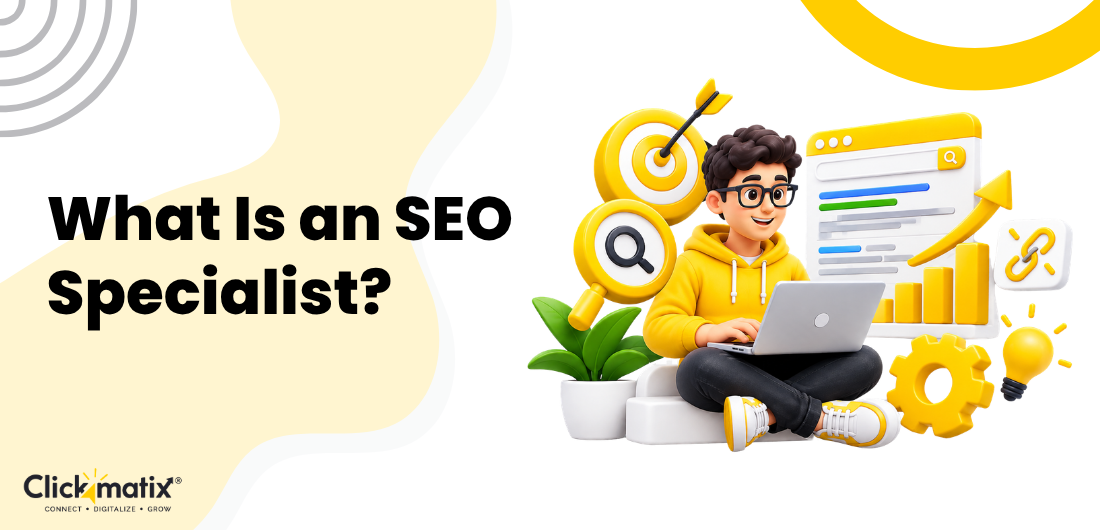



A website that has great products, helpful information, and a polished design might still not show up in Google searches. That’s where SEO specialists come in. They help websites appear in organic search results, bringing in the right visitors without depending only on paid ads.
An SEO specialist analyses how search engines discover, understand, and rank websites, then applies optimisation strategies based on the website’s goals, industry, and target audience. Their work can involve everything from keyword research and technical optimisation to content improvements, link building and performance monitoring.
You may also hear the term search engine optimisation specialist; it means practically the same thing. While specific tasks can vary by business and website, the main goal remains the same: improving organic search performance and helping a website reach people actively searching for relevant products, services, or information.
This guide covers what an SEO specialist does, the main areas they work on, why businesses use SEO specialists, how an individual specialist differs from an SEO agency, and what to consider when choosing a professional agency.
What Does an SEO Specialist Do?
SEO involves multiple areas of optimisation that work together to improve a website’s ability to appear prominently in relevant search results. An SEO specialist typically works across the following areas.
Keyword Research and Targeting
Keyword research is a foundation of SEO. It involves identifying the words and phrases potential customers use when searching for products, services or information.
An SEO specialist considers factors such as:
- Search intent
- Search volume
- Keyword relevance
- Competition
- Commercial value
- The stage of the user’s buying journey
The goal is not simply to target keywords with the highest search volume. A keyword needs to be relevant to the business and match the intent behind the search. For example, someone searching for “how does SEO work” has a different intent from someone searching for “SEO services for small business”.
Once relevant keywords are identified, they can inform website pages, headings, content, metadata, and broader content strategies.
On-Page SEO and Technical Optimisation
SEO specialists also evaluate how well search engines can crawl, understand, and index a website.
On-page SEO can include optimising elements such as:
- Page titles and meta descriptions
- Headings and content structure
- Internal links
- URL structure
- Image alt text
- Content relevance and search intent
Technical SEO focuses on the website’s underlying structure and performance. This can include crawlability, indexation, site architecture, redirects, canonicalisation, structured data, and page experience.
Technical issues can prevent otherwise valuable pages from being properly discovered or indexed. An SEO specialist therefore needs to identify these issues and work with developers or other technical teams when implementation requires code-level changes.
Link Building and Off-Page SEO
Search engines use signals beyond a website’s content and structure when evaluating its authority and relevance. Link building is one part of off-page SEO that focuses on earning relevant links from other websites.
A quality-focused approach considers the relevance, credibility and context of links rather than simply trying to acquire as many backlinks as possible.
An SEO specialist may support activities such as digital PR, content-led outreach and other strategies designed to earn legitimate references from relevant websites. Clickmatix itself describes its approach as using white-hat link building to build relevant backlinks from trusted sites.
Monitoring Rankings, Traffic and SEO Performance
SEO requires ongoing measurement because rankings, search behaviour, competitors and search engine systems can change over time.
An SEO specialist may monitor metrics such as:
- Organic traffic
- Keyword rankings
- Search impressions
- Click-through rates
- Organic conversions
- Indexed pages
- Backlink performance
- Engagement and user behaviour
Tools such as Google Search Console and Google Analytics can provide valuable data for understanding how users discover and interact with a website. Performance data can then be used to identify opportunities, diagnose problems and refine the SEO strategy.
Why Businesses Need SEO Specialists
For many businesses, appearing in relevant search results is key to attracting potential customers. However, SEO involves technical, content, and analytical work that can be difficult to manage alongside everyday business operations.
An SEO specialist can support businesses to:
Improve Search Engine Visibility
Optimising website structure, content, and technical elements makes it easier for search engines to understand a site’s pages. Better visibility can increase the chances of relevant pages appearing for appropriate searches.
Attract Relevant Visitors
SEO is not just about bringing more people to a website. The quality and relevance of that traffic matter. A large number of visitors doesn’t help much if they aren’t looking for the products or services a business provides.
By targeting searches that match a business’s products, services and customer needs, SEO can help bring in visitors who are genuinely interested in what the business offers. They may then spend more time on the website, make an enquiry or take another action that supports the business’s goals.

Get weekly insights for revenue-shifting results
Sign up for our newsletter and be the first one to know about our exclusive offers, digital marketing news and updates.


Support Long-Term Online Growth
Paid advertising can provide visibility while a campaign runs, whereas organic SEO focuses on building sustainable search visibility over time. SEO is therefore generally a long-term process rather than a one-time marketing activity.
A specialist can continuously identify technical issues, content opportunities and changes in search behaviour, allowing the strategy to evolve as the website and market develop.
Help Businesses Compete in Search Results
Businesses are often competing for the same search terms and customers. A structured SEO strategy can help identify where competitors are performing well, where gaps exist and which areas of the website require improvement.
For businesses operating in competitive markets, working with experienced SEO professionals can provide access to specialised knowledge, tools and processes that may otherwise take significant time to develop internally.
SEO Specialist vs SEO Agency
An SEO specialist and an SEO agency can both provide SEO expertise, but their service structures differ.
A specialist is an individual working directly on SEO strategy and implementation. Depending on their experience, they may handle keyword research, technical SEO, content recommendations, reporting and link-building activities themselves.
A professional agency, by contrast, operates with a broader team. Different specialists may contribute to areas such as technical SEO, content, digital PR, web development, analytics, and strategy. This can be particularly useful for businesses with larger websites or more complex requirements.
For example, businesses searching for an SEO agency in Sydney can benefit from access to a broader team with expertise across SEO and digital marketing.
The right approach depends on the business’s website, internal resources, budget, technical requirements, and long-term objectives. Some businesses may need dedicated individual expertise, while others may benefit from a multidisciplinary team.
Choosing a Professional Agency
If a business decides to outsource SEO, choosing the right professional agency requires more than comparing monthly prices. SEO can influence important parts of a website and its digital acquisition strategy, so businesses should understand how an agency approaches the work.
Consider the following factors:
Experience and Proven SEO Approach
Look for an agency that can clearly explain its SEO methodology. A good process should cover areas such as technical SEO, content, keyword targeting, authority building and performance measurement.
Experience within your industry helps because search behaviour, competition, and customer journeys differ across sectors.
Transparent Reporting
SEO reporting should provide meaningful information rather than simply listing ranking positions.
Ask how the agency measures progress and whether reports cover metrics such as organic traffic, conversions, keyword performance, and technical improvements.
Clear reporting makes it easier to understand what work has been completed, what has changed and where the strategy is heading.
Understanding of Business Goals
SEO should support wider business objectives. Increasing rankings can help, but rankings alone don’t necessarily generate revenue.
A professional SEO team should understand what the business is trying to achieve, whether that means generating leads, increasing online sales, improving local visibility, or reaching a specific audience. Clickmatix similarly positions its SEO services around visibility, traffic, conversions, and measurable business growth.
Conclusion
An SEO specialist uses research, technical skills, content know-how, and data analysis to boost a website’s organic search results. They find the right keywords, fix technical problems, improve content, build authority, and track progress. SEO is an ongoing process, not just a one-time fix.
For businesses that need broader expertise, an agency offers a team that covers all parts of SEO and digital marketing. The most important thing is to pick a partner with a clear plan, honest reporting, and a good grasp of your business goals.
Get Visibility Results with a Proven SEO Agency in Sydney
At Clickmatix, we use proven SEO strategies to boost your website’s visibility, bring in the right visitors, and help your business grow. Call 1300 159 314 to discuss your needs and find a strategy that fits your business.
In search for strategic sessions?
Let us understand your business thoroughly and help you
strategies your digital product.

It's time to call your business-
a brand!
 Australian Owned Agency
 Save Time and Money
 Unbeatable Value
 Where Work Gets Done
free Ecommerce SEO guide for Higher Sales & Conversion

THE ULTIMATE MARKETING GUIDE FOR LAWYERS

Youtube Ads Guide How to Advertise on Youtube
free Ecommerce SEO guide for Higher Sales & Conversion
It's time to call your business-
a brand!
- Australian Owned Agency
- Save Time and Money
- Unbeatable Value
- Where Work Gets Done


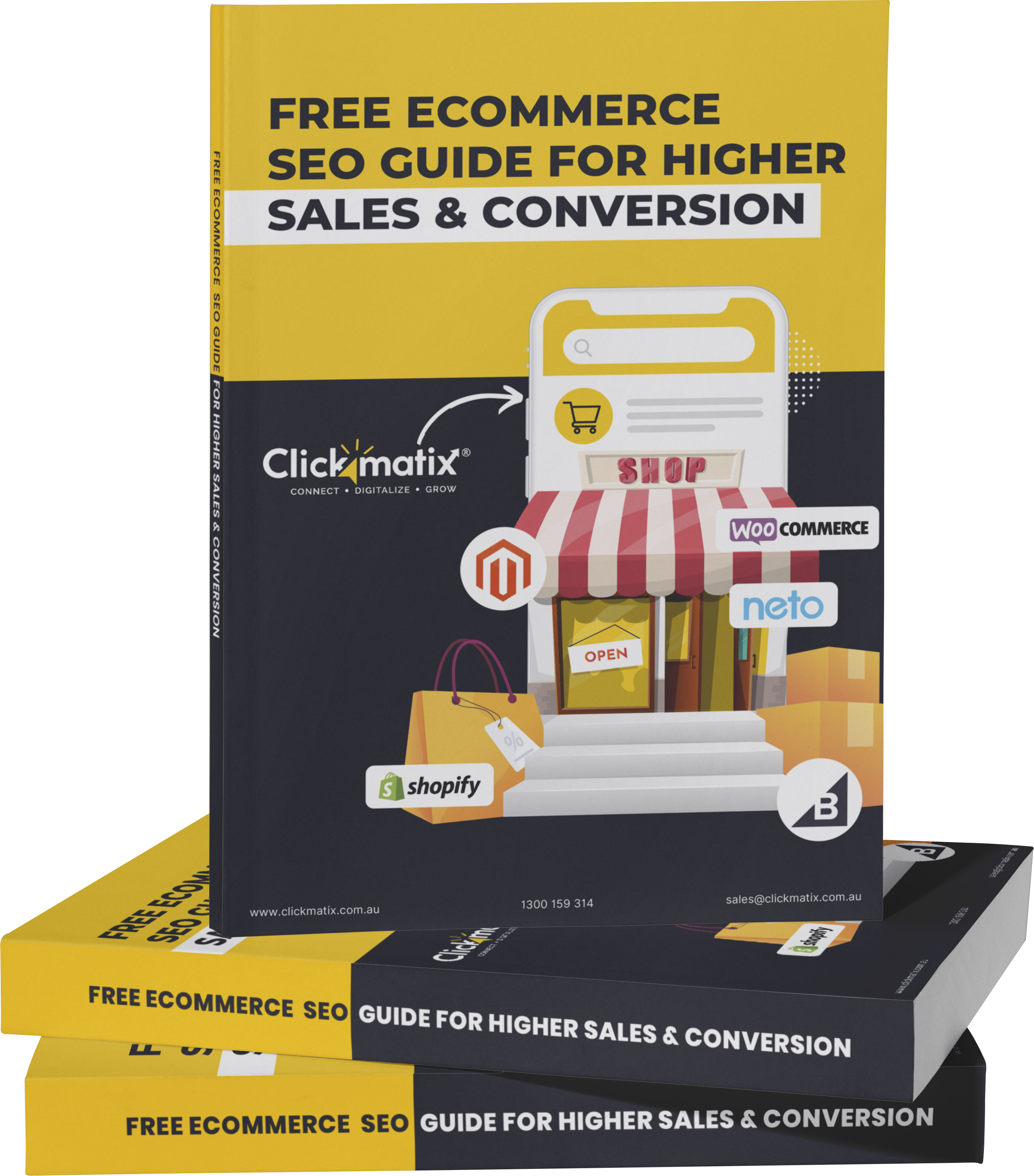
The Game-Changing Ecommerce SEO Guide That Will Blow Your Mind & Sales
With this Ecommerce SEO Guide, you'll be able to:
- Develop a Ecommerce SEO strategy.
- Build a content marketing strategy that aligns with your business goals.
- Convert your website visitors into paying customers.

Youtube ads guide how to advertise on youtube
With this Youtube ads Guide, you'll be able to:
- Develop a Youtube ads strategy.
- Build a type of ads of your own that aligns with your business goals.
- Generate revenue from youtube ads.
It's time to call your business-
a brand!
- Australian Owned Agency
- Save Time and Money
- Unbeatable Value
- Where Work Gets Done